

What's Your Release Management Process?
Maybe the graphic below looks familiar, maybe your process is different. We can help analyze existing processes and look for gaps and opportunities to improve getting your code to production. Or teach folks in the organization the "why's" behind the processes.
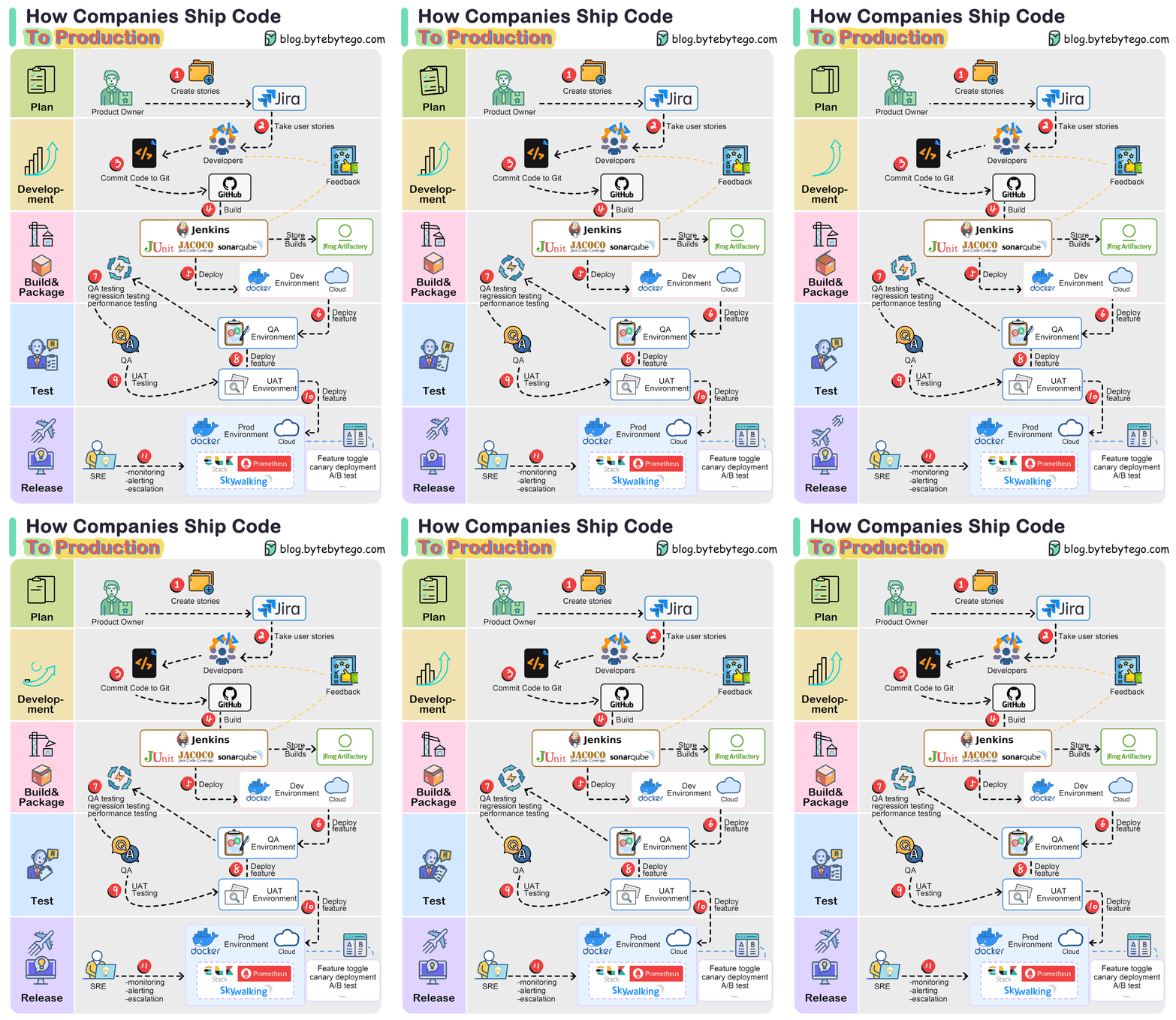
Step 1: The process starts with a product owner creating user stories based on requirements.
Step 2: The development team picks up the user stories from the backlog and puts them into a sprint for a two-week development cycle.
Step 3: The developers commit source code into the code repository Git.
Step 4: A build is triggered in Jenkins. The source code must pass unit tests, code coverage threshold, and gates in SonarQube.
Step 5: Once the build is successful, the build is stored in artifactory. Then the build is deployed into the dev environment.
Step 6: There might be multiple development teams working on different features. The features need to be tested independently, so they are deployed to QA1 and QA2.
Step 7: The QA team picks up the new QA environments and performs QA testing, regression testing, and performance testing.
Step 8: Once the QA builds pass the QA team’s verification, they are deployed to the UAT environment.
Step 9: If the UAT testing is successful, the builds become release candidates and will be deployed to the production environment on schedule.
Step 10: SRE (Site Reliability Engineering) team is responsible for prod monitoring.